How Catastrophic Injury Compensation Is Calculated in New Jersey

Understanding compensation for catastrophic injuries in New Jersey starts with recognizing that these claims operate on a fundamentally different scale than standard personal injury cases. A broken arm heals. A traumatic brain injury, spinal cord damage, or amputation may not. The compensation must account for decades of medical care, permanent changes to earning capacity, and the daily reality of living with an injury that does not resolve.


Insurance companies might treat catastrophic injury claims with resistance proportional to the amount at stake. The larger the potential payout, the more resources the insurer devotes to reducing it. Independent medical examiners, vocational analysts, and defense economists are all part of the playbook. Building a claim that reflects the true cost of a catastrophic injury requires the same level of detail on your side. 


A New Jersey personal injury lawyer may help you evaluate what the claim is truly worth before the insurance company frames the value around its own assumptions.


Book a Free Consultation

Key Takeaways: Catastrophic Injury Compensation in New Jersey


  • Catastrophic injury compensation must project forward across decades, covering future medical care, rehabilitation, in-home assistance, and adaptive equipment that the injured person may need for the rest of their life
  • Lost earning capacity is often one of the largest components of a catastrophic injury claim, particularly when the injured person may never return to their previous occupation or work at the same level
  • Non-economic damages for pain, loss of independence, and reduced quality of life are recoverable and often represent a significant portion of the total claim value
  • Documenting long-term losses requires input from medical providers, rehabilitation specialists, vocational analysts, and economists who may project future costs with the specificity these cases demand
  • New Jersey's two-year statute of limitations applies to catastrophic injury claims, and claims against government entities usually require a notice of tort claim within 90 days


Why Catastrophic Injury Compensation Is Different From Other Injury Claims


A standard personal injury claim typically involves medical bills that are already known and a recovery period with a foreseeable end. The injured person reaches a point of maximum medical improvement (MMI), the costs are tallied, and the claim is valued.


Catastrophic injury claims do not follow that pattern. The injured person may never reach a stable endpoint. Medical needs may evolve over time. New surgeries, replacement prosthetics, updated assistive equipment, and changing care requirements may all arise years after the initial injury. The compensation should reflect those ongoing and future costs, not just the expenses that have accumulated so far.


The need to prove decades of future care and financial loss is what separates catastrophic injury compensation from ordinary personal injury damages.


Current and Future Medical Expenses


Medical costs are typically the largest component of a catastrophic injury claim. The initial hospitalization, emergency surgery, and acute care represent only the beginning. For injuries involving traumatic brain damage, spinal cord damage, severe burns, or amputations, the medical needs may extend across the injured person's remaining lifetime.


Future medical expenses that may factor into a New Jersey catastrophic injury claim include the following:


  • Ongoing surgical and medical treatment: Follow-up surgeries, revision procedures, pain management, and treatment for complications that arise months or years after the initial injury.
  • Physical, occupational, and cognitive rehabilitation: Long-term therapy programs designed to restore or maintain function. For spinal cord injuries and traumatic brain injuries, rehabilitation may continue indefinitely.
  • Prescription medication: Ongoing prescriptions for pain management, seizure prevention, muscle spasticity, infection prevention, and other conditions related to the injury.
  • Diagnostic imaging and monitoring: Regular MRIs, CT scans, and other imaging to monitor the injury and detect complications early.


Projecting these costs requires input from treating physicians and medical providers who may estimate the frequency, duration, and cost of future care. A life care plan, prepared by a qualified specialist, may organize these projections into a comprehensive document that supports the claim.


In-Home Care, Assistive Services, and Home Modifications


Catastrophic injuries frequently change the injured person's ability to live independently. The compensation must account for the support systems required to maintain daily life.


In-Home Care and Personal Assistance


Severe brain injuries, spinal cord injuries, and amputations may require full-time or part-time in-home care. Personal attendants, home health aides, and specialized nursing services may all be part of the long-term care plan. The cost of these services, projected over the injured person's expected lifespan, may represent a substantial portion of the claim.


Home and Vehicle Modifications


Permanent physical limitations may require structural changes to the injured person's living environment. Wheelchair ramps, accessible bathrooms, widened doorways, stairlifts, and modified kitchens may all be necessary. Vehicle modifications, including wheelchair-accessible vans and adaptive driving controls, may also factor into the claim.


Assistive Equipment and Technology


Wheelchairs, prosthetic limbs, communication devices, and other adaptive equipment may need to be replaced periodically over the injured person's lifetime. The cost of initial equipment, maintenance, and scheduled replacements must all be included in the damages calculation.


Lost Income and Reduced Earning Capacity


Catastrophic injuries often eliminate or permanently reduce the injured person's ability to work. The compensation must address both the income already lost during recovery and the long-term reduction in earning ability.


Lost Wages During Recovery


Wages missed from the date of the injury through the present are the most straightforward economic loss to calculate. Pay stubs, tax returns, and employment records document what the injured person was earning before the accident.


Lifetime Earning Capacity Losses


For many catastrophic injury victims, the more significant loss is the income they will never earn. 

Vocational analysts and economists may project these losses by examining the injured person's education, work history, career trajectory, and the labor market for their occupation. The resulting calculation accounts for salary growth, benefits, and inflation over the injured person's expected working life.

Lost earning capacity is often one of the largest parts of a New Jersey catastrophic injury claim because the injury may permanently limit or eliminate the ability to work.


Pain, Suffering, and Loss of Quality of Life


Pain and suffering damages include both the physical pain of the injury and treatment and the emotional distress that accompanies a permanent, life-altering condition. Loss of enjoyment of life reflects the inability to participate in activities, relationships, and experiences that defined daily life before the injury.


For catastrophic injuries, these losses are often profound. A person who may never walk again, who may not recognize family members due to cognitive impairment, or who may require assistance with basic daily tasks faces a fundamentally different life. Non-economic damages reflect that permanent change.


These damages are harder to quantify than medical bills or lost wages, but they often represent a significant portion of total catastrophic injury compensation in New Jersey. An attorney may work with medical providers to document how the injury affects physical function, mental health, independence, and overall well-being.


How Long-Term Damages Are Proven in Catastrophic Injury Cases


Catastrophic injury claims may require a level of documentation and expert analysis that standard personal injury cases do not. The goal is to present a complete financial picture that accounts for every reasonably foreseeable cost across the injured person's remaining lifetime.


The following types of expert involvement are common in New Jersey catastrophic injury claims:


  • Treating physicians and medical specialists: Provide testimony about the nature of the injury, the expected course of treatment, and the long-term prognosis.
  • Life care planners: Prepare comprehensive documents that outline all anticipated future medical, rehabilitative, and support needs, along with their projected costs.
  • Vocational rehabilitation analysts: Assess the injured person's ability to work, identify occupations they may still be able to perform, and calculate the gap between pre-injury and post-injury earning capacity.
  • Economists: Project future lost earnings, future medical costs, and other economic losses in present-day dollars, accounting for inflation, wage growth, and life expectancy.


Each of these experts helps prove a different part of the damages claim, from future medical care to lifetime income loss. Together, their analyses form the evidentiary foundation that supports the value of the claim. Without this level of documentation, catastrophic injury claims are vulnerable to insurance company arguments that future costs are speculative or overstated.


How Is a Catastrophic Injury Claim Valued in New Jersey?


The value of a catastrophic injury claim depends on five factors that work together to determine what compensation may be available. Each factor affects the total differently, and overlooking any one of them may result in a claim that underestimates the true cost of the injury:


  • Current losses: Medical expenses already incurred, wages already missed, and out-of-pocket costs already paid. These are the most straightforward damages to calculate, but in catastrophic injury cases they often represent only a fraction of the total claim value.
  • Future losses: Projected medical care, ongoing rehabilitation, replacement prosthetics, in-home assistance, home and vehicle modifications, and lost earning capacity across the injured person's remaining lifetime. Underestimating future losses is the single most common way catastrophic injury claims lose value.
  • Expert projections: Treating physicians, life care planners, vocational analysts, and economists each contribute a piece of the valuation. Without this level of documentation, insurance companies may argue that future costs are speculative.
  • Available insurance coverage and liable parties: The value of a claim on paper means little if the available insurance coverage does not support it. Identifying every potentially responsible party, including drivers, employers, property owners, product manufacturers, and government entities, matters because each additional defendant may bring additional coverage.


Each of these factors interacts with the others. A claim with strong expert projections but limited available coverage may settle differently from one with multiple liable parties and clear liability. An attorney familiar with New Jersey catastrophic injury claims may help evaluate the factors together to determine the realistic value of the case.


How New Jersey's Comparative Negligence Rule Affects Catastrophic Injury Claims

New Jersey follows a modified comparative negligence  system under N.J.S.A. 2A:15-5.1. Fault is assigned by percentage to each party involved. An injured person may recover compensation as long as their share of fault does not exceed 50 percent. Any award is reduced proportionally.


In catastrophic injury cases, even a small percentage of comparative fault may reduce the award by hundreds of thousands of dollars given the scale of damages involved. Insurance companies aggressively pursue fault arguments in these cases because the financial impact of shifting even 10 or 20 percent of responsibility to the injured person can be enormous.


Strong evidence of the defendant's negligence and thorough documentation of the injured person's conduct before the accident may help minimize or eliminate comparative fault arguments.

FAQs About Catastrophic Injury Compensation in New Jersey


  • Who pays for future medical care after a catastrophic injury in New Jersey?

    Future medical care is pursued through the at-fault party's liability insurance or through a civil lawsuit against all responsible parties. The claim must include detailed projections of anticipated treatment, supported by treating physician testimony and a life care plan that outlines the cost, frequency, and duration of each category of future care. PIP may cover initial expenses, but it does not reach the long-term costs that catastrophic injuries typically involve.

  • What if the insurance company says my future care costs are too high?

    Insurance companies routinely challenge future care projections. They may hire their own medical examiners and economists to argue that costs are inflated or that the injured person's condition is less severe than claimed. A prepared legal team responds with detailed life care plans, treating physician testimony, and independent economic analysis.

  • What if the catastrophic injury resulted from a workplace accident?

    Workers' compensation may cover some medical expenses and lost wages after a  workplace accident, but it does not compensate for pain and suffering or the scope of long-term losses. If a third party, such as an equipment manufacturer or a subcontractor, contributed to the injury, a separate personal injury claim may be available. An attorney may help determine whether both avenues of recovery apply.


  • What if the injured person's condition worsens over time?

    Catastrophic injury claims are built around the realistic long-term prognosis, including the possibility that the condition may deteriorate. Medical testimony and life care plans may account for progressive complications, additional surgeries, and increased care needs over time.

  • How long do I have to file a catastrophic injury claim in New Jersey?

    New Jersey sets a two-year statute of limitations for personal injury claims. Claims against government entities generally require a notice of tort claim within 90 days. Given the complexity of catastrophic injury cases, consulting with an attorney as early as possible helps protect both the legal deadlines and the quality of the evidence.

Book a Free Consultation

The Cost of a Catastrophic Injury Is Not What the Insurance Company Offers First


A catastrophic injury changes the financial trajectory of an entire family. The medical costs are ongoing. The earning losses are permanent. The daily realities of living with the injury do not end when the case is resolved. The compensation must reflect all of that, not just the portion the insurance company is willing to acknowledge in its first offer.


If you or a family member suffered a catastrophic injury in New Jersey and have questions, call Onal Injury Law for a free consultation. Our catastrophic injury attorneys may help you document the scope of your losses, work with the medical and financial professionals your case requires, and pursue compensation that matches the scale of what happened.



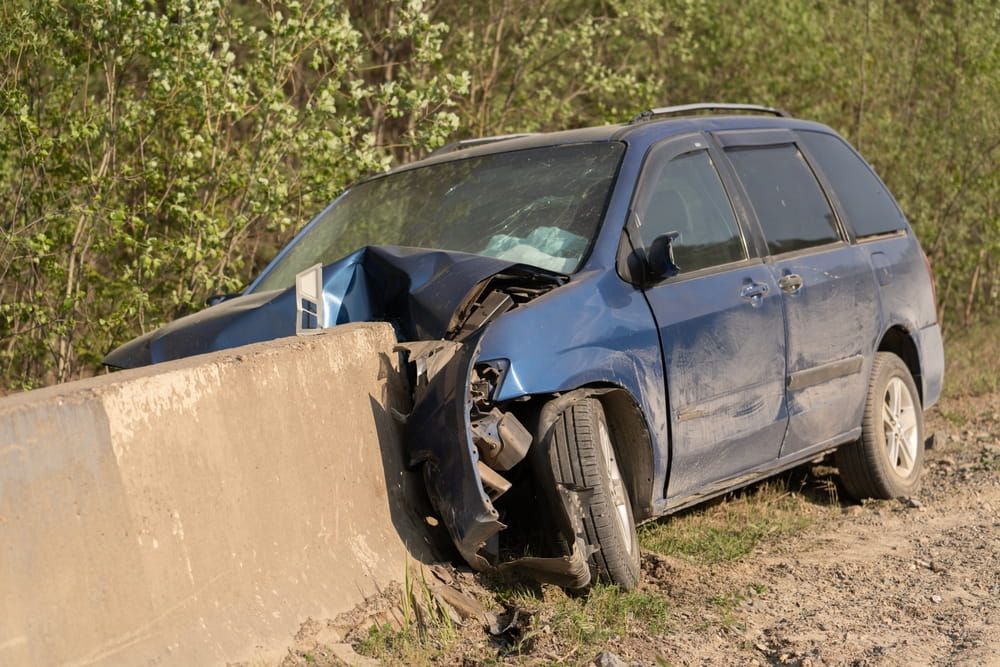
Severely damaged SUV crashed into a concrete barrier on the side of a road
By john onal April 1, 2026
Learn about common catastrophic injury types in New Jersey, including TBIs, spinal cord injuries and burns, and their impact on compensation.
An aerial view of a person crossing a dark city street on a white-striped crosswalk as a red car waits nearby.
By john onal April 1, 2026
Hit by a car in New Jersey? Learn what to do next, your legal rights, who pays medical bills, and how to protect your claim after a pedestrian accident.
The long, dark shadow of a latticed steel tower cast across a white-striped pedestrian crosswalk on asphalt.
By john onal April 1, 2026
Pedestrian accident hotspots in New Jersey: learn where crashes happen most, key risk factors, safety tips, and your legal rights after being hit by a car.
Person holding their knee after tripping and falling on an uneven stone sidewalk
By john onal March 31, 2026
Wet floors, ice, poor lighting, and broken stairs are common slip and fall hazards in New Jersey. Learn how each affects your premises liability claim.
A cyclist in a yellow jersey rides a blue bike on a city sidewalk past a row of parked cars on a sunny day.
By john onal March 31, 2026
Learn your rights after a bicycle accident in New Jersey, including compensation options, insurance coverage, and how to protect your claim.
A cyclist waits at a crosswalk with an ambulance and car approaching in the background.
By john onal March 31, 2026
Learn the most common causes of bicycle accidents in New Jersey, how driver negligence leads to crashes, and what it means for determining fault.
By john onal March 31, 2026
Learn what evidence you need to prove a slip and fall case in New Jersey, from notice and causation to surveillance footage and witness statements.
A professional in a suit writes at a desk beside a brass scales of justice and a gold desk lamp.
By john onal March 31, 2026
An NJ hit-and-run car accident can cause injuries, vehicle damage, and no information about the driver who caused it. The other vehicle is gone. There is no license plate, no insurance card, and no one to hold accountable at the scene.
Two cars are severely damaged after a collision, with debris on the road and an orange traffic cone nearby.
By john onal March 31, 2026
If you were an injured passenger in a New Jersey car accident, your medical bills typically go through PIP first, and then you may pursue additional damages depending on the severity of your injuries and the insurance policies involved.
A person wearing a black LS2 motorcycle helmet with a reflective visor, set against a blurred, warm-toned outdoor background.
By john onal March 31, 2026
New Jersey's motorcycle helmet law requires every rider and every passenger to wear a properly fitted, approved helmet on every ride.
A first-person view from a motorcycle handlebars, showing a paved road winding through a wooded landscape.
By john onal March 31, 2026
The injuries motorcyclists suffer most often in New Jersey tend to be more serious than what you'd see in a typical car crash because there's nothing between the rider and the road.
By john onal March 31, 2026
If you were an injured passenger in a New Jersey car accident, your medical bills typically go through PIP first, and then you may pursue additional damages depending on the severity of your injuries and the insurance policies involved. Passenger rights after a car accident in NJ start with a simple fact: passengers are almost never at fault. Unlike drivers, who may share blame under comparative negligence, a passenger had no control over the vehicle's speed, direction, or decision-making. That distinction gives injured passengers a stronger starting position than most other claimants in a New Jersey car accident case. The complication is not fault. It is figuring out which insurance policies apply, in what order, and whether the injuries qualify for compensation beyond what PIP covers. Recovery for an injured passenger may involve their own auto policy, a family member's policy, the driver's policy, the at-fault driver's liability coverage, or a combination of several. Free Consultation – Speak With a Lawyer Now Key Takeaways for Passenger Rights Car Accident NJ Claims Passengers are rarely assigned fault in a car accident, which means New Jersey's modified comparative negligence rule under N.J.S.A. 2A:15-5.1 typically does not reduce a passenger's recovery PIP coverage follows a priority hierarchy: the passenger's own policy pays first, then a resident family member's policy, then the policy on the vehicle the passenger was riding in A passenger may pursue a liability claim against the at-fault driver, even if that driver is a friend or family member, because the driver's insurance usually handles the defense and may pay compensation up to the policy limits The verbal threshold applies to passengers based on the tort option selected on the policy providing PIP, which may limit access to pain and suffering damages unless the injury meets one of six statutory categories under N.J.S.A. 39:6A-8 When multiple drivers share fault for the accident, the passenger may pursue liability claims against each at-fault driver's insurance Whose Insurance Pays First for a Passenger's Injuries in NJ? New Jersey's no-fault system requires each person to turn to their own PIP coverage first after an auto accident, regardless of fault. For passengers, this creates a priority hierarchy that determines which policy provides benefits. PIP coverage in New Jersey follows the person, not the vehicle. For passengers, three levels determine which policy pays first: The passenger's own auto policy . If the passenger owns a car and carries insurance, that policy is the primary source of PIP benefits. A resident family member's policy . If the passenger does not own a vehicle, a parent's or household member's auto insurance provides PIP. A college student riding with a friend, for example, may access PIP through a parent's policy if they still reside in the same household. The policy on the vehicle the passenger was riding in . This applies only when the passenger has no personal policy and no qualifying family member with coverage. Each level may carry different PIP limits, deductibles, and coverage selections. Identifying the correct primary policy is one of the first steps in a passenger injury claim, and filing under the wrong one may result in a denial that delays access to medical benefits. Get Answers About Your PIP & UM Coverage Learn more about New Jersey car accident lawyers. What Damages Can an Injured Passenger Recover in New Jersey? Recovery for an injured passenger may draw from multiple sources, each covering a different category of loss. Understanding where one source ends and the next begins helps prevent gaps in the claim. PIP Economic Benefits PIP provides the first layer of compensation, available regardless of fault. Under a standard New Jersey auto policy, PIP may cover: Medical expenses for treatment related to accident injuries, up to the selected policy limit (ranging from $15,000 on a basic policy to $250,000 on a standard policy) Income continuation benefits for lost wages, generally up to $100 per week with a cap of $5,200 Essential services benefits for household tasks the injured person may not be able to perform during recovery, generally up to $12 per day, with a cap of $4,380 These figures reflect common default selections, but the specific amounts depend on the coverage options the policyholder chose. A passenger covered under someone else's policy is bound by that policy's selections. Out-of-Pocket Losses Beyond PIP PIP does not cover every expense that follows a serious injury. Costs that fall outside PIP or exceed its limits become part of the broader damages claim. These may include: Copays, deductibles, and medical expenses that exceed the PIP limit Prescription costs, medical devices, and rehabilitation equipment Transportation to and from medical appointments Home modifications or assistance needed during an extended recovery Documenting these expenses as they occur strengthens the claim. Receipts, invoices, and records of mileage create a verifiable trail that supports the total damages calculation. Liability Damages Beyond PIP When the passenger's injuries support a liability claim against the at-fault driver, a broader range of damages becomes available. These damages fall into two categories: Economic damages include measurable financial losses that PIP did not fully cover, such as past and future medical expenses beyond PIP limits, long-term diminished earning capacity, and ongoing care costs that extend well past the initial recovery period. Non-economic damages address losses that do not carry a specific dollar figure. Depending on the applicable tort threshold, these may include physical pain and ongoing discomfort related to the injury, emotional distress and psychological impact, loss of enjoyment of life and the inability to participate in activities valued before the accident, and loss of consortium. Access to non-economic damages depends on whether the applicable policy carries the verbal threshold or the zero threshold, as discussed above. Wrongful Death and Survival Claims When a passenger dies as a result of injuries sustained in a car accident, New Jersey law provides two separate legal actions. A wrongful death claim, brought under N.J.S.A. 2A:31-1 , allows surviving dependents to recover financial losses caused by the death, including lost financial support, household services the deceased provided, and funeral and burial expenses. A survival action, brought on behalf of the deceased passenger's estate, addresses the pain, suffering, and losses the passenger experienced between the time of the injury and the time of death. These two claims serve different purposes and compensate different categories of loss, but they often proceed together in the same litigation. Explore our car accident lawyer services. Can a Passenger Sue for Pain and Suffering in New Jersey? Whether a passenger may pursue non-economic damages depends on the tort option selected on the policy providing PIP benefits. New Jersey drivers choose between two tort options when purchasing auto insurance under N.J.S.A. 39:6A-8 : The limitation on lawsuit option (verbal threshold) restricts the right to sue for non-economic damages unless the injury falls into one of six statutory categories: death, dismemberment, significant disfigurement or scarring, displaced fractures, loss of a fetus, or a permanent injury that has not healed to normal function and will not heal with further treatment. The no limitation on lawsuit option (zero threshold) preserves the full right to sue for pain and suffering regardless of injury severity. For passengers, the tort option that applies is typically the one selected on the policy providing their PIP benefits. This means a passenger may face the verbal threshold even though they had no control over the policy's terms. If the injury meets one of the six statutory categories, or if the applicable policy carries the zero threshold, the passenger may pursue a full liability claim for non-economic damages against the at-fault driver. What if the At-Fault Driver Is a Friend or Family Member? This is where many injured passengers hesitate. Filing a claim against someone you know feels personal. The instinct is to avoid conflict, absorb the medical bills, and move on. That instinct is understandable, but it misunderstands how the claim actually works. A liability claim after a car accident is not a personal financial demand against the driver. It is a claim against the driver's auto insurance policy. The insurance company pays the settlement or verdict, not the individual. The driver's premiums may be affected, but the driver does not write a check from a personal account to cover the passenger's medical bills or lost income. Avoiding the claim does not make the financial consequences of the injury disappear. Filing the liability claim is the mechanism New Jersey law provides for recovering those losses. Additionally, some auto insurance policies contain household exclusions that may limit or bar liability claims between members of the same household. Whether such an exclusion is enforceable depends on the specific policy language and applicable New Jersey case law. An attorney may review the policy language to determine whether the exclusion applies and whether alternative sources of recovery exist. What if Multiple Drivers Were at Fault? Many intersection and multi-vehicle collisions involve shared fault between two or more drivers. As a passenger, this situation often works in your favor. New Jersey's modified comparative negligence standard assigns a percentage of fault to each driver. The passenger, who was not operating either vehicle, typically bears no fault at all. This means the passenger may pursue liability claims against each at-fault driver's insurance policy, up to the limits of each policy. If Driver A is 60% at fault and Driver B is 40% at fault, the passenger may recover from both policies proportionally. When one driver is uninsured or underinsured, the passenger's own uninsured/underinsured motorist (UM/UIM) coverage, or the UM/UIM coverage on the vehicle the passenger was riding in, may fill the gap. The ability to pursue multiple policies is one of the reasons passenger injury claims in multi-vehicle accidents may involve complex coverage analysis across several carriers. What if the Driver Was Uninsured or Underinsured? If the at-fault driver has no liability insurance, the passenger may pursue an uninsured motorist (UM) claim through their own auto policy, a family member's policy, or the policy on the vehicle the passenger was riding in. UM/UIM coverage priority can be more policy-specific than PIP, depending on which policies apply and how their UM/UIM endorsements coordinate. If the at-fault driver carries some insurance but not enough to cover the passenger's losses, underinsured motorist (UIM) coverage may provide additional compensation. UIM coverage becomes available when the total liability limits on the at-fault driver's policies are less than the UIM limits on the injured person's applicable policy. In limited situations where no insurance coverage is available, a passenger may be able to seek benefits through the Unsatisfied Claim and Judgment Fund (UCJF) , administered through NJPLIGA, which has strict eligibility and notice requirements. What About Out-of-State Passengers Injured in New Jersey? New Jersey's Deemer Statute, N.J.S.A. 17:28-1.4 , can require certain out-of-state auto policies issued by insurers authorized (or affiliated) in New Jersey to provide New Jersey-required coverages in accidents that happen in New Jersey. The statute effectively reforms an out-of-state auto policy to include PIP coverage consistent with New Jersey requirements, as long as the insurer is authorized to do business in New Jersey. Whether the Deemer Statute affects a passenger depends on the passenger's status under the applicable policy and the specific eligibility rules, so coverage often requires a policy-by-policy analysis. Simply riding as a passenger in an out-of-state car being driven in New Jersey may not be enough to trigger the statute's protections. Out-of-state passengers injured in New Jersey face complex coverage questions that require careful analysis of which policies apply. Review comparative fault in NJ personal injury cases. FAQs for Passenger Rights Car Accident NJ Claims Does Being a Passenger Mean I Am Automatically Not at Fault? In the vast majority of cases, yes. Passengers do not control the vehicle and are not held to the duties that apply to drivers. In rare circumstances, a passenger's conduct, such as grabbing the steering wheel or distracting the driver in an extreme way, may lead to a fault allocation. These situations are uncommon, and the burden of proving passenger fault falls on the party raising it. What if I Was Not Wearing a Seatbelt? In New Jersey, the defense may argue that failing to wear a seatbelt increased certain injuries, and damages may be reduced for the portion of harm that could have been avoided with seatbelt use. Even for a passenger, the defense may try to reduce damages by showing the injuries were worse because a seatbelt was not used. Can I File a Claim if I Was Riding in an Uber or Lyft? Rideshare companies carry commercial liability policies that apply when the driver is engaged in a trip. These policies typically provide higher coverage limits than a personal auto policy. A passenger injured in a rideshare vehicle may pursue PIP through the standard priority hierarchy and a liability claim against the at-fault party, which may include the rideshare driver, another driver, or both. What if Both Drivers Blame Each Other and No One Admits Fault? As a passenger, you do not need to resolve the dispute between the drivers. You may pursue claims against both drivers' insurance policies. The jury or arbitrator assigns fault percentages, and your recovery comes from each policy proportionally. Disputed liability between the drivers does not prevent the passenger from pursuing compensation. How Long Does It Take to Resolve a Passenger Injury Claim in NJ? The timeline depends on the severity of the injuries, the number of insurance policies involved, and whether liability is disputed between the drivers. Claims involving a single at-fault driver with clear liability may resolve faster than multi-vehicle cases where several carriers are negotiating fault percentages. Liability disputes between drivers do not prevent the claim from moving forward, but they may affect how long it takes each insurer to finalize its share. Your Injuries Deserve the Same Attention Regardless of Who Was Driving Being a passenger does not make your injuries less serious, and it does not make your claim less valid. The discomfort of filing a claim against someone you know is real, but the claim moves through insurance channels, not personal ones, and the medical bills, the missed paychecks, and the recovery process are yours to manage either way. At Onal Injury Law, we handle passenger injury claims with the same preparation and accountability that defines every case we take. Our attorneys trace the coverage hierarchy, identify every applicable policy, and build the claim as though it will be tested at trial.