How to Secure Compensation Following a New Jersey Hit and Run Car Accident

An NJ hit-and-run car accident can cause injuries, vehicle damage, and no information about the driver who caused it. The other vehicle is gone. There is no license plate, no insurance card, and no one to hold accountable at the scene.

In these situations, some may assume that means there is no path to compensation, but New Jersey law provides multiple avenues for recovery, even when the at-fault driver is never identified.

Instead of filing against the other driver's liability insurer, recovery after a hit and run often depends on your own insurance policy, specifically your uninsured motorist (UM) coverage, your PIP benefits, and in some cases, the Unsatisfied Claim and Judgment Fund. Our New Jersey car accident lawyers can help you navigate these complex claims.

Key Takeaways for NJ Hit and Run Car Accident Claims

  • New Jersey treats a hit-and-run vehicle as an "uninsured motor vehicle" under N.J.S.A. 17:28-1.1, which may trigger your own UM coverage
  • PIP benefits pay for medical expenses and a portion of lost income, regardless of who caused the accident or whether the other driver is identified
  • Phantom vehicle accidents, where the at-fault driver causes a crash without making physical contact, face additional evidentiary hurdles that require early documentation and independent corroboration
  • Filing a police report promptly and making reasonable efforts to identify the other driver are often required under UM policy terms and may be critical to pursuing an unidentified driver claim
  • The two-year statute of limitations generally applies to a lawsuit against the at-fault driver, but UM claims against your own insurer often follow different time limits (and your policy may require much faster notice)

What Qualifies as a Hit and Run Under New Jersey Law?

Under N.J.S.A. 39:4-129 , every driver involved in a collision resulting in injury, death, or property damage must stop at the scene. The driver must exchange information with the other parties, render reasonable assistance to anyone who is injured, and report the accident to law enforcement. A hit and run occurs when a driver fails to fulfill these obligations.

From the victim's perspective, the legal definition matters because New Jersey classifies hit-and-run vehicles as uninsured motor vehicles. A hit and run vehicle is defined under N.J.S.A. 39:6-78 as one where the identity of the motor vehicle and of the operator and owner cannot be determined, or where the vehicle was in the possession of someone other than the owner without consent, and that person's identity cannot be established.

That statutory classification opens the door to recovery through your own UM policy.

What About a Phantom Vehicle Accident?

Not every hit and run involves physical contact between vehicles. A phantom vehicle accident occurs when an unidentified driver causes a crash without ever touching your car. A common example: a vehicle swerves into your lane on the Turnpike, forcing you to brake suddenly or veer off the road. The other driver continues on. Your vehicle strikes a guardrail or another car, but the vehicle that caused the chain of events is gone.

New Jersey law recognizes that a hit-and-run vehicle does not need to make physical contact with the claimant or the claimant's vehicle in order for the injured person to collect uninsured motorist benefits. However, phantom vehicle claims carry a higher evidentiary burden than contact-based hit and runs, which is addressed in detail below.

How UM Coverage Becomes Your Primary Path to Recovery

When the at-fault driver disappears, your own auto insurance policy becomes the primary source of compensation for injuries and losses beyond what PIP covers. Uninsured motorist coverage is first-party coverage that provides compensation to an insured under their own automobile policy for personal injury and other losses caused by an uninsured tortfeasor.

How Much UM Coverage Does New Jersey Require?

New Jersey requires minimum UM coverage limits that have increased in recent years under N.J.S.A. 17:28-1.1 , and for many policies issued or renewed on or after January 1, 2026, the minimum is $35,000 per person and $70,000 per accident. Insurers may not limit coverage to the statutory minimum and are required to offer additional UM coverage up to $250,000 per person or $500,000 per accident for bodily injury.

Two exceptions apply. Drivers who carry a basic auto policy under N.J.S.A. 39:6A-3.1 , or a special policy under N.J.S.A. 39:6A-3.3 , may not have UM coverage at all. For those drivers, alternate paths such as the Unsatisfied Claim and Judgment Fund may be available.

How PIP and UM Coverage Work Together After a Hit and Run

PIP coverage activates immediately after any auto accident, regardless of fault. It pays for medical expenses, a portion of lost income, and essential services you may not be able to perform during recovery. PIP is your first layer of coverage, and it applies whether the other driver is identified or not.

UM coverage addresses a different category of losses. While PIP handles immediate medical and economic costs, UM may cover damages that PIP does not reach, including pain and suffering (subject to your tort threshold selection), lost earning capacity beyond PIP limits, and other non-economic losses.

Identifying where PIP ends, and UM begins is one of the first steps an attorney takes when evaluating an NJ hit and run car accident claim. Our car accident lawyer team can help you understand these coverages.

What "Reasonable Efforts" Must You Demonstrate After an NJ Hit and Run?

In order to assert a UM claim based on an accident caused by a hit and run driver, the claimant must demonstrate that they made reasonable efforts to determine the identity of the vehicle, its owner, and its operator. This standard comes from the Appellate Division's decision in Scheckel v. State Farm Mutual (1998).

Reasonable efforts may include:

  • Calling local law enforcement immediately after the accident and providing every detail you recall about the fleeing vehicle, including color, make, model, direction of travel, and any partial plate information
  • Asking witnesses at the scene whether they observed the other vehicle or captured any photos or video
  • Checking for nearby surveillance cameras at businesses, traffic intersections, or residential doorbell systems
  • Cooperating with the investigating officers and following up on the police report to confirm its accuracy and completeness

Filing the police report promptly is the foundation of this requirement. Insurance carriers scrutinize the timeline between the accident and the first report to law enforcement. A gap may give the insurer grounds to challenge the claim's credibility.

But the report alone may not satisfy the standard if other reasonable steps, like canvassing for witnesses or requesting nearby camera footage, were available and not taken.

The Corroboration Requirement for Phantom Vehicle Claims in NJ

Phantom vehicle claims present a distinct challenge. When there is no physical contact with the at-fault vehicle, the injured person faces a higher evidentiary burden than in contact-based hit-and-run cases.

Where the Corroboration Standard Comes From

Many UM policy endorsements historically required that the facts of a noncontact accident be corroborated by competent evidence other than the claimant's own testimony. Insurers argued this requirement reduced the potential for fraudulent claims.

The New Jersey Supreme Court rejected that position in Perez v. American Bankers Insurance Co. of Florida (1979). The court held that contractual corroboration clauses in noncontact hit and run cases are invalid because they conflict with the purposes of New Jersey's uninsured motorist statutes.

A phantom vehicle's existence does not need to be corroborated by independent evidence to establish a prima facie UM claim.

What This Means in Practice

The Perez ruling removed the contractual barrier, but it did not eliminate the practical need for supporting evidence. Insurance carriers still evaluate credibility. A phantom vehicle claim supported only by the injured person's account, with no witnesses, no physical evidence, and no police report, faces an uphill path in arbitration or at trial.

Independent evidence that may strengthen a phantom vehicle claim includes:

  • Witness statements from other motorists, passengers, or pedestrians who observed the unidentified vehicle's conduct
  • Dashcam or traffic camera footage showing the phantom vehicle's movements before the crash
  • Physical evidence at the scene, such as skid marks, debris patterns, or damage consistent with an evasive maneuver
  • Accident reconstruction analysis from a qualified professional who may link the physical evidence to a phantom vehicle scenario

The more independent sources supporting the claim, the stronger its foundation.

How Fault Allocation Works When a Phantom Vehicle Is Involved

New Jersey's Comparative Negligence Act, N.J.S.A. 2A:15-5.1 , requires juries to allocate fault among all parties who contributed to an accident. In Krzykalski v. Tindall (2018), the New Jersey Supreme Court held that phantom vehicles driven by known but unidentified motorists may presumptively be allocated fault.

This means if the phantom driver bears most of the responsibility but is never identified, the UM claim against your own insurer becomes the mechanism for recovering that share of the damages. If identified, the identified defendant pays only their proportional share.

What Types of Compensation May Be Available After an NJ Hit and Run Car Accident?

The compensation available after a hit and run depends on the coverage in your policy and the severity of your injuries.

PIP benefits cover immediate economic losses. Medical expenses, a portion of lost wages, and essential services are available under PIP regardless of who caused the accident. The limits of your PIP coverage determine how far these benefits extend.

UM benefits address losses that PIP does not cover. Depending on your tort threshold selection (verbal or zero threshold), UM may provide compensation for:

  • Pain and suffering related to injuries that meet the statutory threshold requirements
  • Future medical costs that exceed PIP limits
  • Long-term diminished earning capacity
  • Loss of enjoyment of life and other non-economic damages

If the at-fault driver is later identified and carries insurance, the claim may shift from a UM claim to a third-party liability claim against that driver's insurer. The two pathways are not always interchangeable, and the timing of identification may affect which coverage applies.

Common Mistakes That May Weaken an Unidentified Driver Claim

Several missteps may undermine a UM claim after a hit and run, regardless of how strong the underlying facts are.

Delaying the Police Report

Waiting too long to report the accident creates a credibility gap. Insurers question why an injured person delayed if the accident happened the way they describe. Filing the report as soon as safely possible protects the claim's foundation.

Missing the UM Notice Window

Most UM endorsements require timely notice of the accident and the intent to make a claim. The specific timeframe varies by policy, but delay invites denial. Notifying your own carrier promptly, even before knowing the full extent of your injuries, preserves the right to pursue UM benefits.

Leaving Evidence at the Scene

Photographs of vehicle damage, road conditions, skid marks, and debris help reconstruct what happened. If witnesses are present, collecting their contact information immediately preserves access to their accounts before memories fade. Evidence that is not documented at the scene may never be recovered. For more on this, contact our Paterson NJ personal injury lawyer for guidance.

Settling for PIP Without Evaluating UM Eligibility

PIP covers a defined category of economic losses. It does not address pain and suffering, long-term earning capacity losses, or other non-economic damages that UM may cover. Accepting a PIP-only resolution without a full review of available UM benefits may leave significant compensation unrecovered.

FAQs for NJ Hit and Run Car Accident Claims

What if I Only Got a Partial License Plate Number?

A partial plate may be enough for law enforcement to identify the vehicle, especially when combined with a description of the make, model, color, and direction of travel. Even if the plate leads to the vehicle, but the driver denies involvement, the investigation may produce evidence that connects the vehicle to the crash scene.

Does My UM Claim Go Through Arbitration or Court?

UM disputes in New Jersey are typically resolved through arbitration rather than a jury trial. The specific procedure depends on the terms of your UM endorsement. If required, arbitration follows the rules outlined in the policy and applicable case law. If the arbitration produces an unsatisfactory result, limited avenues for appeal may exist depending on the circumstances.

What if I Do Not Have UM Coverage on My Policy?

Drivers with a basic or special auto policy may not carry UM coverage. In those situations, the Unsatisfied Claim and Judgment Fund , administered through the state, may provide limited compensation for injuries caused by unidentified or uninsured drivers. The fund has specific eligibility requirements and caps on recovery. An experienced New Jersey personal injury lawyer can help you navigate this process.

How Long Do I Have to File a Claim After a Hit and Run in NJ?

Generally, the statute of limitations for personal injury claims in New Jersey is two years from the date of the accident. However, UM policy deadlines for providing notice to your insurer may be shorter. Missing either deadline may eliminate the ability to pursue compensation.

What if There Were Witnesses but They Did Not Stay at the Scene?

Witnesses who leave the scene may still be located through the police investigation. Officers often canvass the area, review surveillance footage, and follow up on leads. If a witness is identified later, their statement may still support the claim. Your attorney may also retain an investigator to locate witnesses who were present but did not provide information at the scene.

When the Other Driver Is Gone, Your Claim Can Still Move Forward

A hit and run takes away the certainty of knowing who caused the crash, but it does not take away the right to pursue compensation. New Jersey's UM framework exists precisely for this situation, providing a path to recovery through your own policy when the at-fault driver is unknown.

At Onal Injury Law, we approach hit and run cases with the same preparation and discipline that defines every case we accept. Our attorneys identify every applicable coverage source, build the evidentiary record from the first phone call, and prepare the claim as though it will be tested under cross-examination. Learn more about our New Jersey car accident lawyers and how we can assist you.


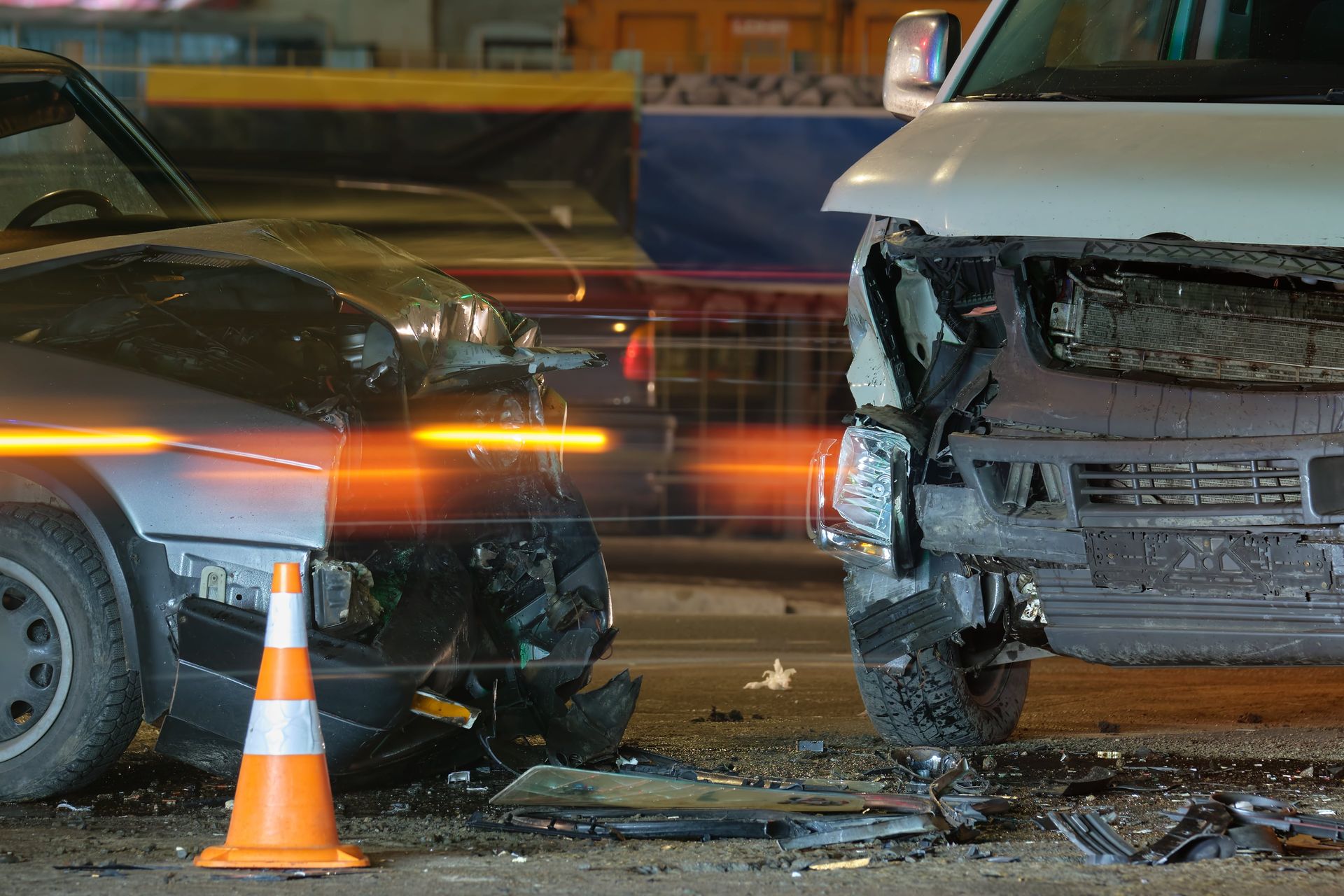
Two cars are severely damaged after a collision, with debris on the road and an orange traffic cone nearby.
By john onal March 31, 2026
If you were an injured passenger in a New Jersey car accident, your medical bills typically go through PIP first, and then you may pursue additional damages depending on the severity of your injuries and the insurance policies involved.
A person wearing a black LS2 motorcycle helmet with a reflective visor, set against a blurred, warm-toned outdoor background.
By john onal March 31, 2026
New Jersey's motorcycle helmet law requires every rider and every passenger to wear a properly fitted, approved helmet on every ride.
A first-person view from a motorcycle handlebars, showing a paved road winding through a wooded landscape.
By john onal March 31, 2026
The injuries motorcyclists suffer most often in New Jersey tend to be more serious than what you'd see in a typical car crash because there's nothing between the rider and the road.
By john onal March 31, 2026
If you were an injured passenger in a New Jersey car accident, your medical bills typically go through PIP first, and then you may pursue additional damages depending on the severity of your injuries and the insurance policies involved. Passenger rights after a car accident in NJ start with a simple fact: passengers are almost never at fault. Unlike drivers, who may share blame under comparative negligence, a passenger had no control over the vehicle's speed, direction, or decision-making. That distinction gives injured passengers a stronger starting position than most other claimants in a New Jersey car accident case. The complication is not fault. It is figuring out which insurance policies apply, in what order, and whether the injuries qualify for compensation beyond what PIP covers. Recovery for an injured passenger may involve their own auto policy, a family member's policy, the driver's policy, the at-fault driver's liability coverage, or a combination of several. Free Consultation – Speak With a Lawyer Now Key Takeaways for Passenger Rights Car Accident NJ Claims Passengers are rarely assigned fault in a car accident, which means New Jersey's modified comparative negligence rule under N.J.S.A. 2A:15-5.1 typically does not reduce a passenger's recovery PIP coverage follows a priority hierarchy: the passenger's own policy pays first, then a resident family member's policy, then the policy on the vehicle the passenger was riding in A passenger may pursue a liability claim against the at-fault driver, even if that driver is a friend or family member, because the driver's insurance usually handles the defense and may pay compensation up to the policy limits The verbal threshold applies to passengers based on the tort option selected on the policy providing PIP, which may limit access to pain and suffering damages unless the injury meets one of six statutory categories under N.J.S.A. 39:6A-8 When multiple drivers share fault for the accident, the passenger may pursue liability claims against each at-fault driver's insurance Whose Insurance Pays First for a Passenger's Injuries in NJ? New Jersey's no-fault system requires each person to turn to their own PIP coverage first after an auto accident, regardless of fault. For passengers, this creates a priority hierarchy that determines which policy provides benefits. PIP coverage in New Jersey follows the person, not the vehicle. For passengers, three levels determine which policy pays first: The passenger's own auto policy . If the passenger owns a car and carries insurance, that policy is the primary source of PIP benefits. A resident family member's policy . If the passenger does not own a vehicle, a parent's or household member's auto insurance provides PIP. A college student riding with a friend, for example, may access PIP through a parent's policy if they still reside in the same household. The policy on the vehicle the passenger was riding in . This applies only when the passenger has no personal policy and no qualifying family member with coverage. Each level may carry different PIP limits, deductibles, and coverage selections. Identifying the correct primary policy is one of the first steps in a passenger injury claim, and filing under the wrong one may result in a denial that delays access to medical benefits. Get Answers About Your PIP & UM Coverage Learn more about New Jersey car accident lawyers. What Damages Can an Injured Passenger Recover in New Jersey? Recovery for an injured passenger may draw from multiple sources, each covering a different category of loss. Understanding where one source ends and the next begins helps prevent gaps in the claim. PIP Economic Benefits PIP provides the first layer of compensation, available regardless of fault. Under a standard New Jersey auto policy, PIP may cover: Medical expenses for treatment related to accident injuries, up to the selected policy limit (ranging from $15,000 on a basic policy to $250,000 on a standard policy) Income continuation benefits for lost wages, generally up to $100 per week with a cap of $5,200 Essential services benefits for household tasks the injured person may not be able to perform during recovery, generally up to $12 per day, with a cap of $4,380 These figures reflect common default selections, but the specific amounts depend on the coverage options the policyholder chose. A passenger covered under someone else's policy is bound by that policy's selections. Out-of-Pocket Losses Beyond PIP PIP does not cover every expense that follows a serious injury. Costs that fall outside PIP or exceed its limits become part of the broader damages claim. These may include: Copays, deductibles, and medical expenses that exceed the PIP limit Prescription costs, medical devices, and rehabilitation equipment Transportation to and from medical appointments Home modifications or assistance needed during an extended recovery Documenting these expenses as they occur strengthens the claim. Receipts, invoices, and records of mileage create a verifiable trail that supports the total damages calculation. Liability Damages Beyond PIP When the passenger's injuries support a liability claim against the at-fault driver, a broader range of damages becomes available. These damages fall into two categories: Economic damages include measurable financial losses that PIP did not fully cover, such as past and future medical expenses beyond PIP limits, long-term diminished earning capacity, and ongoing care costs that extend well past the initial recovery period. Non-economic damages address losses that do not carry a specific dollar figure. Depending on the applicable tort threshold, these may include physical pain and ongoing discomfort related to the injury, emotional distress and psychological impact, loss of enjoyment of life and the inability to participate in activities valued before the accident, and loss of consortium. Access to non-economic damages depends on whether the applicable policy carries the verbal threshold or the zero threshold, as discussed above. Wrongful Death and Survival Claims When a passenger dies as a result of injuries sustained in a car accident, New Jersey law provides two separate legal actions. A wrongful death claim, brought under N.J.S.A. 2A:31-1 , allows surviving dependents to recover financial losses caused by the death, including lost financial support, household services the deceased provided, and funeral and burial expenses. A survival action, brought on behalf of the deceased passenger's estate, addresses the pain, suffering, and losses the passenger experienced between the time of the injury and the time of death. These two claims serve different purposes and compensate different categories of loss, but they often proceed together in the same litigation. Explore our car accident lawyer services. Can a Passenger Sue for Pain and Suffering in New Jersey? Whether a passenger may pursue non-economic damages depends on the tort option selected on the policy providing PIP benefits. New Jersey drivers choose between two tort options when purchasing auto insurance under N.J.S.A. 39:6A-8 : The limitation on lawsuit option (verbal threshold) restricts the right to sue for non-economic damages unless the injury falls into one of six statutory categories: death, dismemberment, significant disfigurement or scarring, displaced fractures, loss of a fetus, or a permanent injury that has not healed to normal function and will not heal with further treatment. The no limitation on lawsuit option (zero threshold) preserves the full right to sue for pain and suffering regardless of injury severity. For passengers, the tort option that applies is typically the one selected on the policy providing their PIP benefits. This means a passenger may face the verbal threshold even though they had no control over the policy's terms. If the injury meets one of the six statutory categories, or if the applicable policy carries the zero threshold, the passenger may pursue a full liability claim for non-economic damages against the at-fault driver. What if the At-Fault Driver Is a Friend or Family Member? This is where many injured passengers hesitate. Filing a claim against someone you know feels personal. The instinct is to avoid conflict, absorb the medical bills, and move on. That instinct is understandable, but it misunderstands how the claim actually works. A liability claim after a car accident is not a personal financial demand against the driver. It is a claim against the driver's auto insurance policy. The insurance company pays the settlement or verdict, not the individual. The driver's premiums may be affected, but the driver does not write a check from a personal account to cover the passenger's medical bills or lost income. Avoiding the claim does not make the financial consequences of the injury disappear. Filing the liability claim is the mechanism New Jersey law provides for recovering those losses. Additionally, some auto insurance policies contain household exclusions that may limit or bar liability claims between members of the same household. Whether such an exclusion is enforceable depends on the specific policy language and applicable New Jersey case law. An attorney may review the policy language to determine whether the exclusion applies and whether alternative sources of recovery exist. What if Multiple Drivers Were at Fault? Many intersection and multi-vehicle collisions involve shared fault between two or more drivers. As a passenger, this situation often works in your favor. New Jersey's modified comparative negligence standard assigns a percentage of fault to each driver. The passenger, who was not operating either vehicle, typically bears no fault at all. This means the passenger may pursue liability claims against each at-fault driver's insurance policy, up to the limits of each policy. If Driver A is 60% at fault and Driver B is 40% at fault, the passenger may recover from both policies proportionally. When one driver is uninsured or underinsured, the passenger's own uninsured/underinsured motorist (UM/UIM) coverage, or the UM/UIM coverage on the vehicle the passenger was riding in, may fill the gap. The ability to pursue multiple policies is one of the reasons passenger injury claims in multi-vehicle accidents may involve complex coverage analysis across several carriers. What if the Driver Was Uninsured or Underinsured? If the at-fault driver has no liability insurance, the passenger may pursue an uninsured motorist (UM) claim through their own auto policy, a family member's policy, or the policy on the vehicle the passenger was riding in. UM/UIM coverage priority can be more policy-specific than PIP, depending on which policies apply and how their UM/UIM endorsements coordinate. If the at-fault driver carries some insurance but not enough to cover the passenger's losses, underinsured motorist (UIM) coverage may provide additional compensation. UIM coverage becomes available when the total liability limits on the at-fault driver's policies are less than the UIM limits on the injured person's applicable policy. In limited situations where no insurance coverage is available, a passenger may be able to seek benefits through the Unsatisfied Claim and Judgment Fund (UCJF) , administered through NJPLIGA, which has strict eligibility and notice requirements. What About Out-of-State Passengers Injured in New Jersey? New Jersey's Deemer Statute, N.J.S.A. 17:28-1.4 , can require certain out-of-state auto policies issued by insurers authorized (or affiliated) in New Jersey to provide New Jersey-required coverages in accidents that happen in New Jersey. The statute effectively reforms an out-of-state auto policy to include PIP coverage consistent with New Jersey requirements, as long as the insurer is authorized to do business in New Jersey. Whether the Deemer Statute affects a passenger depends on the passenger's status under the applicable policy and the specific eligibility rules, so coverage often requires a policy-by-policy analysis. Simply riding as a passenger in an out-of-state car being driven in New Jersey may not be enough to trigger the statute's protections. Out-of-state passengers injured in New Jersey face complex coverage questions that require careful analysis of which policies apply. Review comparative fault in NJ personal injury cases. FAQs for Passenger Rights Car Accident NJ Claims Does Being a Passenger Mean I Am Automatically Not at Fault? In the vast majority of cases, yes. Passengers do not control the vehicle and are not held to the duties that apply to drivers. In rare circumstances, a passenger's conduct, such as grabbing the steering wheel or distracting the driver in an extreme way, may lead to a fault allocation. These situations are uncommon, and the burden of proving passenger fault falls on the party raising it. What if I Was Not Wearing a Seatbelt? In New Jersey, the defense may argue that failing to wear a seatbelt increased certain injuries, and damages may be reduced for the portion of harm that could have been avoided with seatbelt use. Even for a passenger, the defense may try to reduce damages by showing the injuries were worse because a seatbelt was not used. Can I File a Claim if I Was Riding in an Uber or Lyft? Rideshare companies carry commercial liability policies that apply when the driver is engaged in a trip. These policies typically provide higher coverage limits than a personal auto policy. A passenger injured in a rideshare vehicle may pursue PIP through the standard priority hierarchy and a liability claim against the at-fault party, which may include the rideshare driver, another driver, or both. What if Both Drivers Blame Each Other and No One Admits Fault? As a passenger, you do not need to resolve the dispute between the drivers. You may pursue claims against both drivers' insurance policies. The jury or arbitrator assigns fault percentages, and your recovery comes from each policy proportionally. Disputed liability between the drivers does not prevent the passenger from pursuing compensation. How Long Does It Take to Resolve a Passenger Injury Claim in NJ? The timeline depends on the severity of the injuries, the number of insurance policies involved, and whether liability is disputed between the drivers. Claims involving a single at-fault driver with clear liability may resolve faster than multi-vehicle cases where several carriers are negotiating fault percentages. Liability disputes between drivers do not prevent the claim from moving forward, but they may affect how long it takes each insurer to finalize its share. Your Injuries Deserve the Same Attention Regardless of Who Was Driving Being a passenger does not make your injuries less serious, and it does not make your claim less valid. The discomfort of filing a claim against someone you know is real, but the claim moves through insurance channels, not personal ones, and the medical bills, the missed paychecks, and the recovery process are yours to manage either way. At Onal Injury Law, we handle passenger injury claims with the same preparation and accountability that defines every case we take. Our attorneys trace the coverage hierarchy, identify every applicable policy, and build the claim as though it will be tested at trial.
A white box truck driving on a curved, paved road surrounded by lush green trees.
By john onal March 31, 2026
A truck brake failure accident raises a different question than most collision cases.
A metallic gold Volvo semi-truck driving on a highway with a blurred background of trees.
By john onal March 31, 2026
Is the trucking company liable in a New Jersey truck accident? In many cases, the answer is yes, but it depends on the facts and the company's relationship to the driver and the truck.
A yellow and dark green Mitsubishi Fuso truck with a black cargo cover travels along a road against a mountainous backdrop.
By john onal March 31, 2026
Truck black box data can be some of the strongest evidence in a New Jersey truck accident case, especially when fault is disputed, and the trucking company's version of events keeps changing.
A bronze Lady Justice statue holding scales and a sword sits on a wooden desk in a dimly lit office.
By john onal March 31, 2026
The New Jersey personal injury trial process begins long before anyone enters a courtroom. Click here to read more about it.
Image of catastrophic injury
By john onal March 31, 2026
A catastrophic injury settlement in NJ depends on proving what the next 10, 20, or 40 years of care may cost, not just what treatment has cost so far.
Image of lawyer
By john onal March 31, 2026
The personal injury litigation process in NJ moves through distinct phases. When pre-suit negotiations stall and an insurance offer falls short, litigation may be the next step
CDL law truck accident case New Jersey
By Bruce Gunacti October 3, 2025
A new CDL law in 2025 could change how truck crash cases in New Jersey and New York are fought and won.
Motorcyclist sitting on a bike near a city road in New Jersey.
By Bruce Gunacti March 6, 2025
Need a motorcycle accident lawyer in New Jersey? Explore the top 10 attorneys who can help you secure compensation after a crash. Find expert legal representation today.